
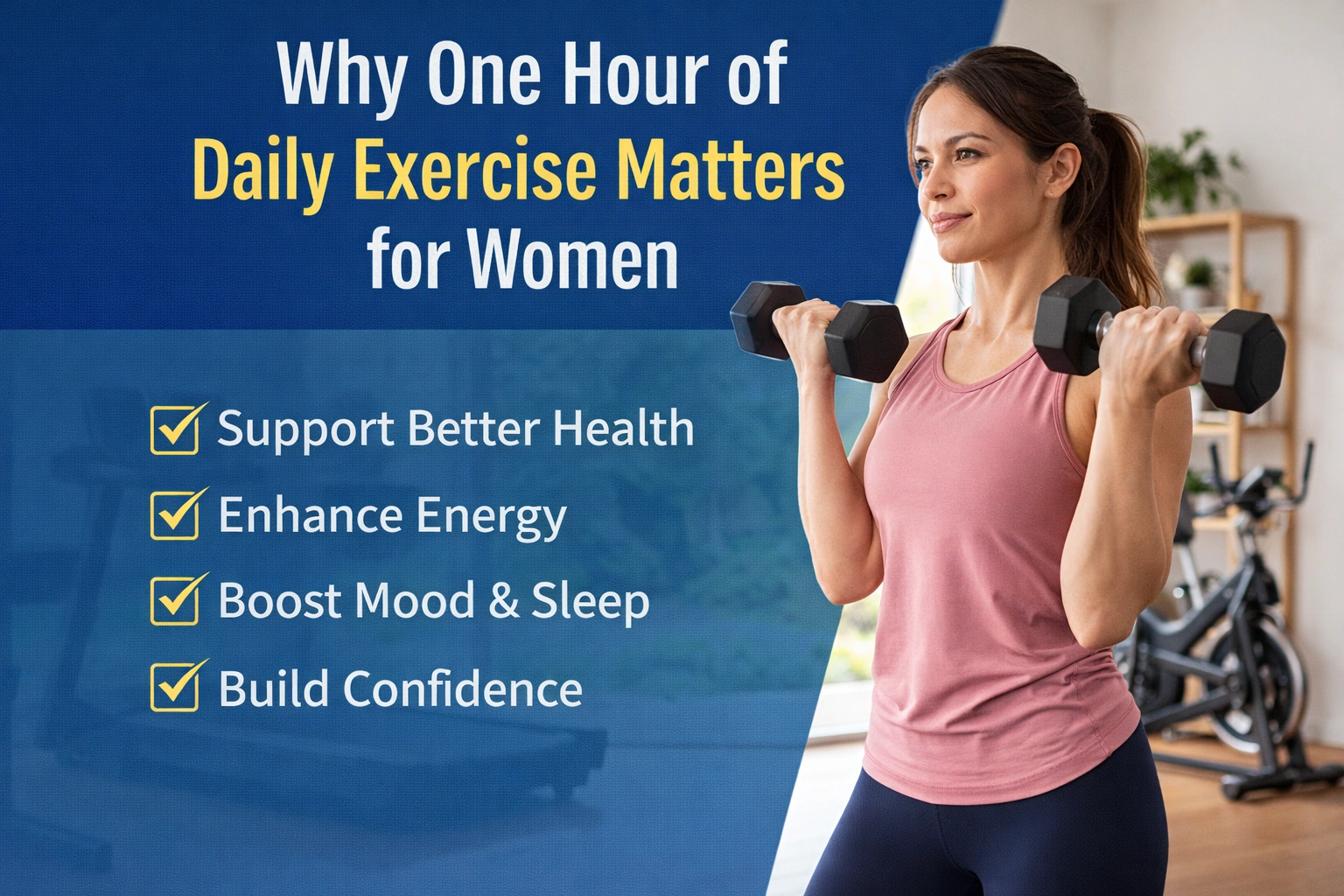
Why One Hour of Daily Exercise Matters for Women
For many women, exercise is not simply about appearance or reaching a certain number on the scale. It is about building a healthier body, a steadier mind, and a daily rhythm that feels more supportive and sustainable. Health authorities recommend that adults get at least 150 to 300 minutes of moderate-intensity physical activity each week, and note that 300 minutes brings additional health benefits. A consistent hour of movement each day adds up to about 420 minutes a week, placing it well above that benchmark.
One of the biggest benefits of regular exercise is better overall health. Physical activity helps lower the risk of chronic conditions, supports cardiovascular health, improves sleep quality, and can reduce blood pressure and anxiety. Over time, it also supports stronger energy levels, better physical function, and a body that feels more capable in everyday life, whether that means climbing stairs, carrying groceries, or getting through long workdays with less fatigue.
Exercise also has a powerful effect on mood. The benefits are not only long term. Even a single session of movement can reduce short-term feelings of anxiety, while regular activity is associated with lower risk of depression and better sleep. That is one reason many women notice emotional changes before visible body changes: they feel calmer, more stable, and more mentally clear long before they see dramatic physical results.
When it comes to posture and body shape, light strength work, core training, stretching, walking, Pilates-style movement, and other low-impact routines can make a meaningful difference. Regular movement helps support balance, stability, muscular endurance, and body control. In real life, that often looks like standing taller, moving with more control, feeling less tight through the shoulders and hips, and gradually developing a firmer, more toned look. The value is not only aesthetic. Better posture and movement quality often mean less strain, better comfort, and more confidence in the body.
These physical and emotional benefits often carry directly into work and daily life. Better sleep, lower anxiety, and sharper thinking can improve concentration, patience, and decision-making. Regular activity has been linked to stronger brain health and helps support thinking, learning, and judgment skills over time. For busy women, this can translate into more mental clarity during the day, less emotional burnout after work, and a greater sense of control over everyday demands.
The challenge, of course, is making exercise realistic. That is where home fitness becomes especially important. ASICS reported in 2024 that 74% of women said lack of time was a barrier to exercise. That finding matters because it shows the issue is often not motivation, but access, convenience, and the ability to fit movement into real life. For many women, working out at home removes some of the biggest points of friction: commuting to a gym, matching class schedules, preparing for a public setting, or needing a large block of uninterrupted time.
This is one reason the broader wellness and at-home health market continues to grow. McKinsey described the global wellness market as a $1.8 trillion category in 2024 and highlighted “health at home” as a defining trend. That supports what many brands and consumers are already seeing: more people want health solutions that fit into everyday routines, not only into ideal schedules. Home-friendly movement, especially for women balancing work, caregiving, and personal responsibilities, answers that need in a practical way.
So the real value of one hour of daily exercise is not just that it helps women look better. It helps them feel stronger, think more clearly, sleep more deeply, and move through life with more ease. It supports health, mood, posture, confidence, and consistency all at once. And because time remains one of the biggest barriers to exercise, home fitness is not just a convenience. For many women, it is the most realistic path to building a routine they can truly keep.