
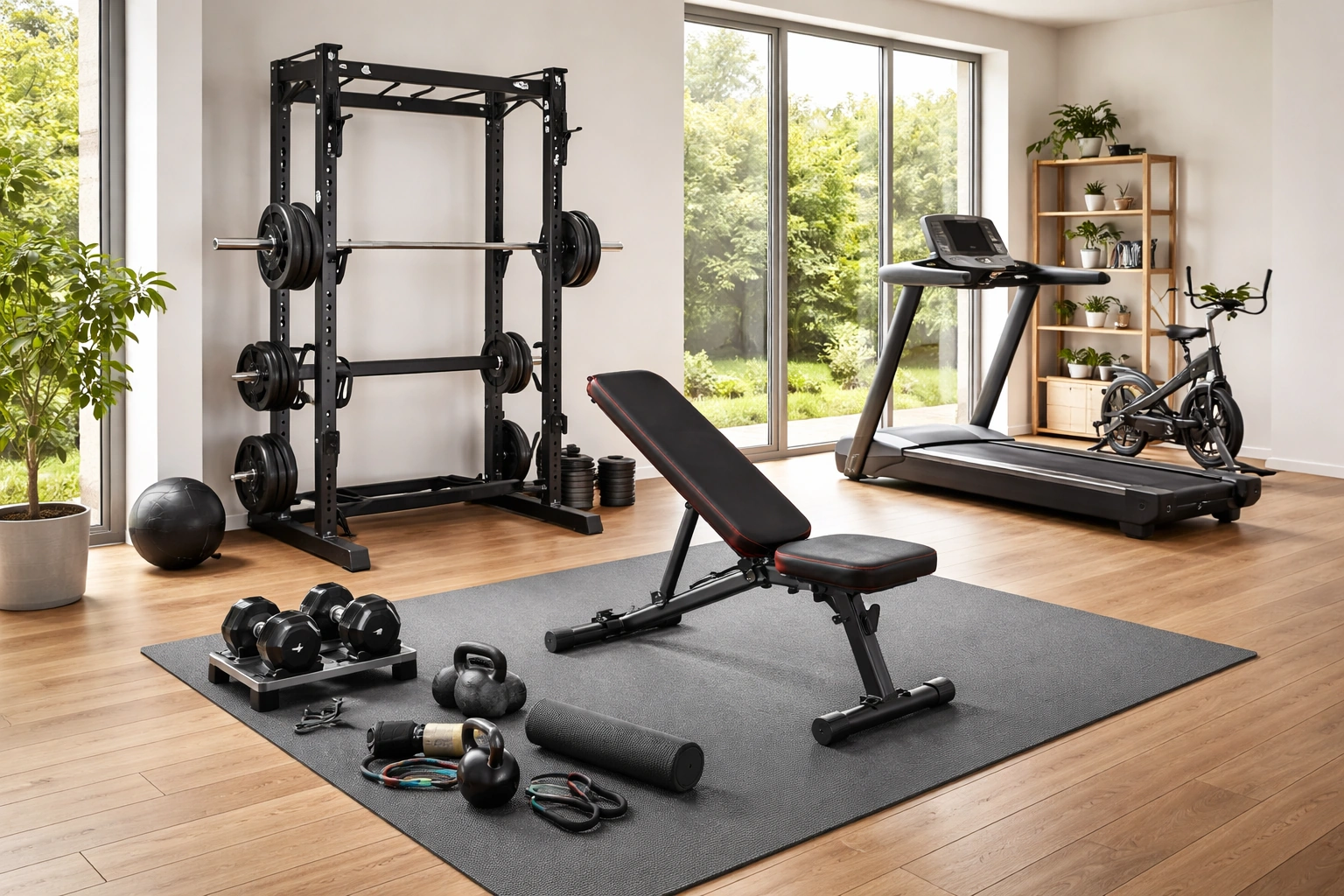
Why More Women Are Choosing to Work Out at Home
More women are choosing home fitness not because they care less about exercise, but because they want a routine that fits real life better. Recent research from ASICS found that 74% of women say lack of time is a barrier to exercise, and the same study highlighted other day-to-day pressures that make consistent movement harder to maintain. That matters because it shifts the conversation: for many women, the issue is not motivation, but practicality.
One of the biggest advantages of home fitness is time convenience. Going to a gym often means far more than the workout itself: commuting, changing, waiting for equipment, and fitting into class schedules all add friction. Working out at home removes much of that extra effort and makes shorter sessions easier to start and repeat. That is especially important because public-health guidance emphasizes that adults benefit from regular physical activity, with 150 to 300 minutes of moderate activity per week recommended, and any amount of movement being better than none. Home fitness makes it easier to build those minutes into daily life.
Privacy is another major reason. Many women do not dislike exercise itself; they dislike feeling watched, judged, or out of place while exercising in public. PureGym’s 2025/26 fitness report found that women are more likely than men to experience “gymtimidation,” with 17% of women reporting it, and among people who feel intimidated by gyms, 79% say exercising in front of other people is the main reason. Home workouts remove that social pressure and give women a more comfortable space to start, learn, and move at their own pace.
Hygiene and comfort also matter more than people sometimes admit. Cleanliness is not just about appearance; it affects whether a space feels safe, usable, and inviting. Industry research summarized by IHRSA notes that a gym’s general cleanliness and cleaning protocols are a key factor in making customers feel comfortable and safe, and that feeling unsafe was the top reason consumers gave for leaving a gym during the pandemic. At home, women have full control over the equipment, the floor space, the cleaning routine, and the overall environment, which can make exercise feel more relaxed and more sustainable.
Home fitness is also easier to personalize. In a gym, a workout often feels like an event that has to be “worth it,” which can make exercise feel all-or-nothing. At home, it is easier to do 20 minutes of Pilates, 30 minutes of walking, a quick strength session, or a short recovery routine without the pressure of making it look serious to anyone else. That flexibility matches how many women actually live: fitting movement around work, caregiving, household responsibilities, and changing energy levels. Since health guidance recognizes that all movement counts, home fitness can be a more realistic path to consistency than waiting for the perfect gym window.
Compared with a gym, home fitness has a different kind of strength. Gyms offer more equipment variety, social energy, and a dedicated training atmosphere. But home workouts offer privacy, convenience, hygiene control, and greater flexibility. For beginners, busy professionals, mothers, and women who simply prefer a calmer environment, those advantages can outweigh the benefits of a public workout space. The choice is often less about which option is “better” in theory, and more about which one is easier to maintain in real life.
That is why home fitness keeps growing in relevance. It supports a version of exercise that is less intimidating, less time-consuming, and easier to repeat. For many women, that is exactly what makes it work: not a perfect routine, but a realistic one.